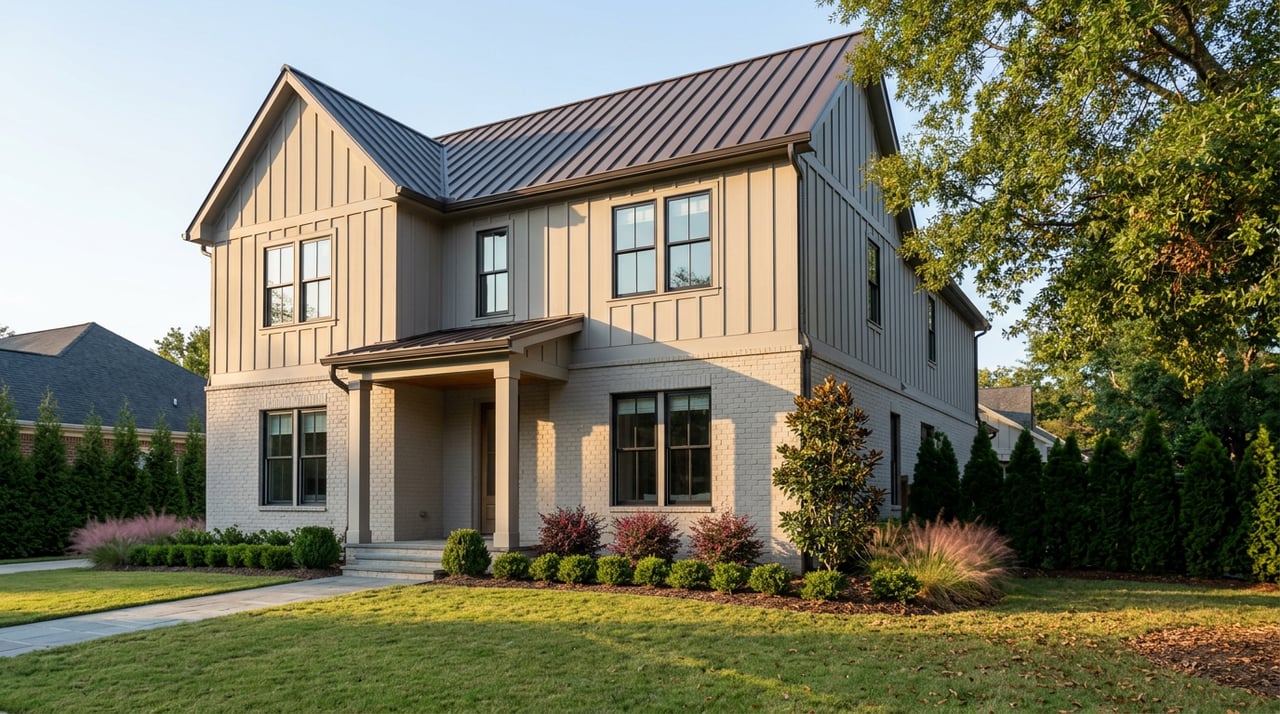
A buyer comparing two $510,000 homes in Fort Mill this fall might assume they're looking at the same product with different floor plans. They're not. One of those homes carries a fee the other doesn't, a fee large enough to change the math on the deal, and most of the portals that report Fort Mill's median price never mention it.
That fee is $29,640, and it only applies to one side of the market.
The Fee That Only Shows Up on One Side of the Ledger
Since July 1, 2025, every new single-family home built inside the Fort Mill School District, which reaches into parts of Tega Cay, has carried a school impact fee of $29,640 per unit. New multi-family units carry a separate $20,796 fee. York County Council approved the fee after school district leaders made the case that growth in Fort Mill required funding new buildings without going back to voters for a bond referendum. Since 2018, impact fees in the district have generated more than $73 million for school construction, money the district would otherwise have needed to raise through a public vote.
A resale home in the same neighborhood, built five years ago with a finished yard and blinds already on the windows, never touches that fee. It was grandfathered in before the ordinance existed. A new build going up in Springfield or Massey right now pays it at the building permit stage, and depending on the builder, that cost either gets absorbed into the base price you're quoted or gets added on top of it.
One York County Councilman put it plainly when the fee passed. Referring to the district's academic reputation, he said the fee reflects that "it's worth $30,000 on a house." Whether or not a buyer agrees with the number, the practical takeaway is the same: ask the builder directly whether the $29,640 is baked into the price on the sign or waiting to appear on the closing statement. Builders handle this differently, and the difference is real money.
Why the Median Price You're Reading Doesn't Mean What You Think
Anyone who has pulled up three different sites to check Fort Mill's median home price this year has probably noticed the number won't hold still. Over the spring and summer of 2026, reported medians ranged from around $464,000 on one platform to roughly $530,000 on another, with most monthly readings clustering closer to $500,000. Price per square foot told a similar story, running somewhere between $224 and $240 depending on the source, with one tracker showing it up more than 12 percent year over year as of August 2026.
That spread isn't noise. It's what happens when a single median tries to describe two markets that behave differently. A resale townhome with no impact fee and an established HOA sits in the same broad price band as a new single-family build that just absorbed a $29,640 line item and is still waiting on landscaping. Average them together and you get a number that describes neither one accurately.
This matters most for a buyer trying to decide between new and resale in the same budget range. The honest way to compare them isn't the sticker price. It's the full package: base price, the impact fee if it applies, lot premiums, design-center upgrades, and the cost of finishing a yard that a resale home already has. HOA dues add another layer of spread, ranging from roughly $40 a month in basic communities to $400 or $500 a month in communities with full amenity packages like clubhouses and pools.
A rough side-by-side for a buyer weighing the same budget:
| New Construction | Resale | |
|---|---|---|
| School impact fee | $29,640 (Fort Mill School District, per unit) | Not applicable |
| Yard, blinds, basic finishes | Often an added cost | Usually included |
| Design-center upgrades | Buyer-selected, adds to base price | Not applicable |
| HOA range | $40 to $500+/month depending on amenities | $40 to $500+/month depending on amenities |
| Timeline | Months to build, if not already underway | Move-in ready |
Neither column is the better deal on its face. It depends on whether a buyer values a customizable, brand-new home enough to pay the fee and the finishing costs, or would rather have a turnkey resale with the landscaping and the price already settled.
The Tax Line That Quietly Works in the Other Direction
There's a second mechanism that cuts against the impact fee, and it's easy to miss because it shows up gradually instead of all at once. South Carolina taxes owner-occupied primary residences using a 4 percent assessment ratio rather than full market value. A home valued at $500,000 doesn't get taxed as if it's worth $500,000. It gets taxed as if it's worth a fraction of that, with the local millage rate applied to the reduced figure. The statewide effective property tax rate lands somewhere in the range of 0.5 to 0.8 percent of a home's actual value, well below what a comparable home would carry in a market that taxes at full assessed value.
That doesn't cancel out the $29,640 fee on a new build. It offsets it over time. A buyer who pays the fee upfront on a new home is also locking in a lower ongoing carrying cost for as long as they live there and claim it as their primary residence. Whether that trade favors new construction or resale depends entirely on how long someone plans to stay, which is exactly the kind of math worth running before writing an offer, not after.
Why the Timing Matters Right Now
Here's where this stops being a static comparison and becomes something worth watching this month specifically. Fort Mill has paused new residential development twice in roughly the last year. The first pause ran through the end of 2025, timed to take effect one week before the impact fee itself kicked in. The second, Ordinance 2026-19, was adopted at a special council meeting on March 31, 2026, tied to the town's newly finalized Comprehensive Plan and Downtown Master Plan. That ordinance pauses new applications for residential rezoning, annexation, and preliminary plats, and it's set to expire September 30, 2026 at 11:59 PM, unless Town Council votes to extend it, with a possible 90-day extension already built into how the ordinance was structured.
That date is ten days away as of this writing.
The moratorium doesn't touch homes already under contract or communities that were zoned and approved before it took effect. Builders active in Springfield, Massey, and Sun City Carolina Lakes have kept working through the freeze because their approvals predate it. What the moratorium does affect is the next wave: any land that hasn't yet been rezoned or annexed for new residential development can't move forward while the pause is in place.
For a buyer shopping right now, that means the inventory in front of you this fall is largely the inventory that was already in the pipeline before March. What happens after September 30 will shape how much new supply shows up in 2027, not this year's listings. If the council lets the moratorium lapse, expect new rezoning applications to start moving again. If they extend it another 90 days, the freeze on new supply continues into winter.
What This Means If You're Comparing New and Resale This Fall
The takeaway isn't that one option beats the other. It's that the median price on any listing site is quietly blending two products with different cost structures and different supply pipelines, and a buyer who treats it as one number is missing the part of the deal that actually moves the budget.
Before comparing a new build to a resale in Fort Mill, ask three questions: Is the $29,640 impact fee already included in the quoted price, or will it show up at closing? What's the HOA structure, and does it match the amenities you actually want? And if you're looking at a lot that hasn't broken ground yet, is that community's zoning already approved, or is it waiting on a process the town has currently paused?
None of those questions show up in a median price. All three change what you actually pay.
If you're weighing a move into Fort Mill and want someone to run the real numbers on a specific new build versus a specific resale, Morey Realty Group can walk through the comparison line by line before you make an offer. Let's Connect.
